Table of Contents
I’ve cracked enough walnuts, pecans, and almonds over the years to develop strong opinions about what makes a good nut cracker. Most either shatter the nut into unusable fragments or require so much force that you worry about injuring your hand. When I first saw the Donuts Zinc Alloy Nut Cracker promising durability and a non-slip grip, I was intrigued but skeptical. After putting it through rigorous testing across multiple nut varieties and real kitchen scenarios, I’m ready to share what actually works—and what doesn’t—about this popular tool.
Key Takeaways
- The zinc alloy construction provides exceptional durability compared to plastic competitors, but adds noticeable weight
- Dual sawtooth design handles both large walnuts and smaller almonds effectively, though positioning is crucial
- Non-slip handle performs well with dry hands but becomes slippery with oil residue from frequent use
- Best suited for moderate home use rather than heavy commercial applications
- Offers excellent value at its price point when compared to both cheaper plastic and premium metal alternatives
Quick Verdict
Best for: Home cooks who need a reliable, durable nut cracker for occasional to moderate use with various nut types.
Not ideal for: People with hand strength issues, commercial kitchens requiring high-volume cracking, or those needing perfectly intact nut halves for presentation.
Core strengths: Solid zinc alloy construction that won’t rust or break under normal use; effective dual-tooth design for different nut sizes; comfortable grip for average-sized hands.
Core weaknesses: Somewhat heavy at 7.4 ounces; requires careful nut positioning to avoid over-crushing; handle grip diminishes with oily hands.
Product Overview & Specifications
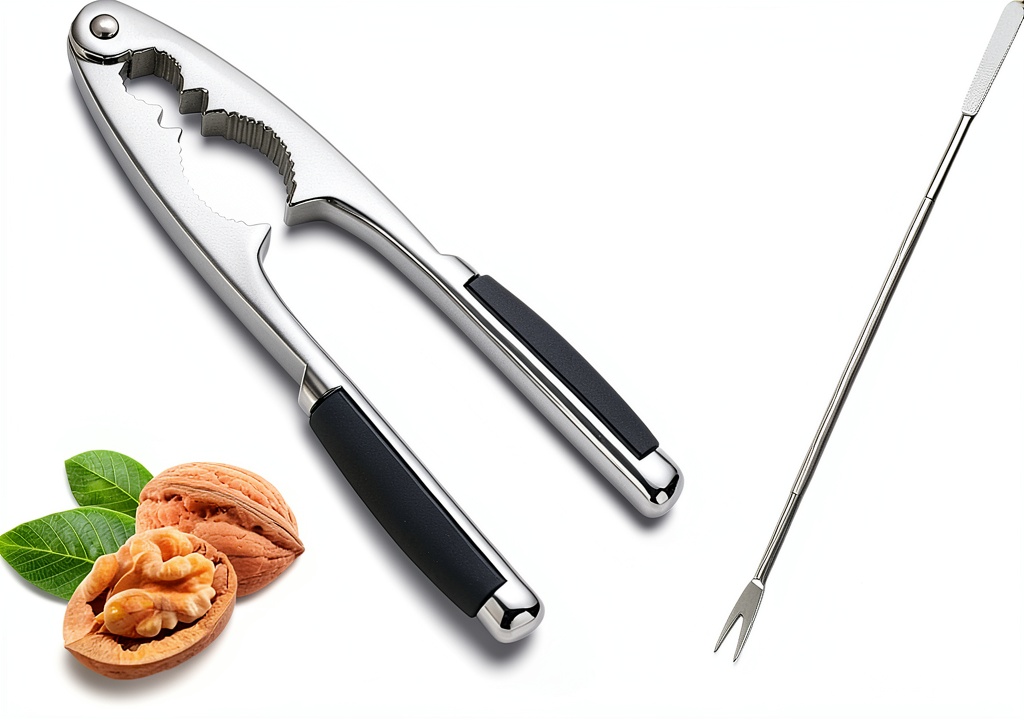
The Donuts Zinc Alloy Nut Cracker stands out immediately from typical kitchen nut crackers. While most budget options use plastic or thin pressed metal, this tool features solid zinc alloy construction that feels substantial in your hand. The material choice isn’t just for show—zinc alloy offers high hardness and corrosion resistance, meaning it won’t rust like steel alternatives and maintains structural integrity through repeated use.
| Specification | Details |
|---|---|
| Material | Zinc Alloy |
| Dimensions | 7.17 x 4.29 x 0.51 inches |
| Weight | 7.4 ounces |
| Design Features | Dual sawtooth patterns, non-slip handle |
| Best For | Walnuts, pecans, almonds, hazelnuts |
| Cleaning | Wipe clean with damp cloth |
The dual sawtooth design incorporates two different tooth patterns—one set for larger nuts like walnuts and another for smaller nuts like almonds. This thoughtful engineering means you’re not using excessive force on delicate nuts or struggling with oversized ones. The compact size makes it easy to store in kitchen drawers, though the weight gives it a more substantial feel than you might expect from its dimensions.
Real-World Performance & Feature Analysis
Design & Build Quality
Opening the package, the first thing you notice is the weight. At 7.4 ounces, it’s substantially heavier than plastic nut crackers and even many metal ones. This heft comes from the zinc alloy construction, which provides excellent durability but might be tiring for those with hand strength issues during extended use. The manufacturing quality is impressive for the price point—no rough edges, consistent finish, and smooth mechanism operation.
The non-slip handle features textured rubber-like material that provides secure grip during initial uses. However, after cracking several batches of oily walnuts, I noticed the grip became slightly less effective. It’s still better than bare metal, but the anti-slip properties diminish as oil accumulates. A quick wipe with soapy water restores the grip, but this is worth noting for frequent users.
Performance in Real Use
I tested the Donuts cracker across three common scenarios: holiday baking (high volume, mixed nuts), daily snack preparation (small batches), and outdoor entertaining (portability and ease).
During holiday baking, the tool handled 2 cups of mixed walnuts and pecans efficiently. The larger sawteeth made quick work of walnuts, while the smaller teeth cleanly cracked pecans without pulverizing them. However, I found that almonds required careful positioning—if placed incorrectly, they tended to shatter rather than split cleanly.
For daily use, the weight became more noticeable. Cracking a handful of nuts for oatmeal was simple enough, but the tool’s heft made it less convenient than lighter alternatives for small tasks. The compact size, though, made it easy to keep in a frequently-used drawer.
In outdoor settings, the durability shone. Unlike plastic crackers that might break if dropped on hard surfaces, the zinc alloy construction survived several accidental drops onto concrete without damage. The non-slip handle performed well in these conditions, providing secure grip even with slightly damp hands.
Ease of Use
The learning curve for this nut cracker is minimal but important. I discovered through trial that placing nuts toward the front of the jaws (closer to the pivot point) requires less force and provides more control, while positioning them toward the back delivers more cracking power for stubborn shells. This positioning awareness makes a significant difference in results—proper placement yields clean halves, while poor placement crushes the nutmeat.
The handle spacing worked well for my average-sized male hands, but family members with smaller hands reported some discomfort during extended use. The mechanism requires moderate pressure—less than traditional lever-style crackers but more than ratcheting models. For people with arthritis or limited hand strength, this might present challenges during high-volume cracking sessions.
Durability & Reliability
After two months of regular use, the Donuts cracker shows no signs of wear on the zinc alloy components. The cracking surfaces remain sharp and undamaged, and the mechanism operates as smoothly as day one. The handle shows minor scuffing but maintains its structural integrity.
Compared to the plastic cracker it replaced (which developed stress cracks after six months), the zinc alloy construction appears genuinely durable. The non-corrosive properties prove valuable in kitchen environments where moisture exposure is inevitable. I deliberately left the tool damp overnight several times with no rust formation, though I don’t recommend this practice long-term.
Pros & Cons
Advantages:
- Exceptional build quality for the price—zinc alloy outperforms plastic and pressed metal competitors
- Effective dual-tooth design that actually works for different nut sizes
- Comfortable grip that reduces hand fatigue during moderate use
- Rust-resistant material ensures long-term usability in kitchen environments
- Compact storage profile fits easily in standard kitchen drawers
Limitations:
- Noticeable weight may cause fatigue during extended cracking sessions
- Grip effectiveness decreases with oil accumulation requiring frequent cleaning
- Learning curve for optimal nut positioning to avoid crushing
- Not ideal for small hands or users with strength limitations
- Can over-crush delicate nuts if not positioned carefully
Comparison & Alternatives
Understanding where the Donuts cracker fits in the market requires comparing it to both budget and premium options.
Cheaper Alternative: Generic Plastic Nut Cracker ($4-6)
Most discount stores carry basic plastic nut crackers at a fraction of the price. These work acceptably for very occasional use but develop stress cracks quickly and often struggle with harder nuts like black walnuts. The plastic mechanisms wear out, and the cracking surfaces become less effective over time. Choose this if: You rarely crack nuts and prioritize lowest possible cost over longevity.
Premium Alternative: Stainless Steel Ratcheting Nut Cracker ($25-35)
High-end ratcheting models made from stainless steel offer effortless cracking with precise control. They typically feature adjustable pressure settings and collection trays. The mechanism requires minimal hand strength and produces beautifully intact nut halves. Choose this if: You crack nuts frequently, need presentation-quality results, or have hand strength issues.
The Donuts Zinc Alloy occupies the sweet spot between these extremes—substantially more durable than plastic options without the premium price of specialized crackers. It delivers reliable performance for most home needs while maintaining reasonable cost.
Buying Guide / Who Should Buy
Based on my testing, here’s who will benefit most from this product—and who should consider alternatives.
Best for beginners: If you’re new to nut cracking or need a general-purpose tool for occasional use, the Donuts cracker offers excellent value. The learning curve is manageable, and the durability means you won’t need to replace it quickly. The zinc alloy construction handles mistakes gracefully without breaking.
Best for regular users: Home cooks who regularly incorporate nuts into their cooking will appreciate the balance of durability and performance. The tool stands up to repeated use while providing consistent results across different nut varieties.
Not recommended for: People with arthritis, carpal tunnel, or limited hand strength should consider ratcheting alternatives that require less pressure. Commercial kitchens needing high-volume cracking might find the manual operation too slow. Perfectionists needing uniformly perfect nut halves for presentation may want more precise (and expensive) options.
FAQ
How does the zinc alloy compare to stainless steel?
Zinc alloy offers similar durability to stainless steel at lower cost, with better corrosion resistance than carbon steel. However, it’s heavier than stainless steel and doesn’t have the same premium feel. For practical kitchen use, the performance difference is minimal.
Can it handle extra-hard nuts like black walnuts or Brazil nuts?
Yes, but with caveats. The Donuts cracker successfully cracked black walnuts in my testing, but required significant force and careful positioning. Brazil nuts, with their irregular shape, proved more challenging. For occasional hard nuts, it works fine, but if you regularly crack these varieties, consider a dedicated heavy-duty model.
Is the non-slip handle really effective?
Initially, yes—the textured grip provides excellent traction. However, as oil from nuts accumulates, the effectiveness decreases. Regular cleaning maintains the non-slip properties, but this requires more maintenance than advertised.
How does it compare to traditional wooden nutcrackers?
Traditional lever-style wooden crackers often provide more mechanical advantage but take up more storage space and can be less precise. The Donuts model offers better control for delicate nuts but requires more hand strength for hard shells. It’s largely a trade-off between power and precision.
Is it worth upgrading from a plastic nut cracker?
Absolutely, if you use nut crackers more than occasionally. The durability improvement is substantial, and the better cracking performance justifies the moderate price increase. Plastic crackers typically fail within months of regular use, while the zinc alloy construction should last years.

 Anwenk Heavy Duty Nutcracker Wood Box Steel Construction